
Appliance repair in Cottonwood Heights, UT
We repair refrigerators and ice makers, washers, dryers, dishwashers, ovens and ranges, and built-in microwaves. Dash Appliance Service serves homes in Cottonwood Heights and the rest of the Wasatch Front.
$99 trip fee, credited toward the repair when the repair is completed. How our pricing works
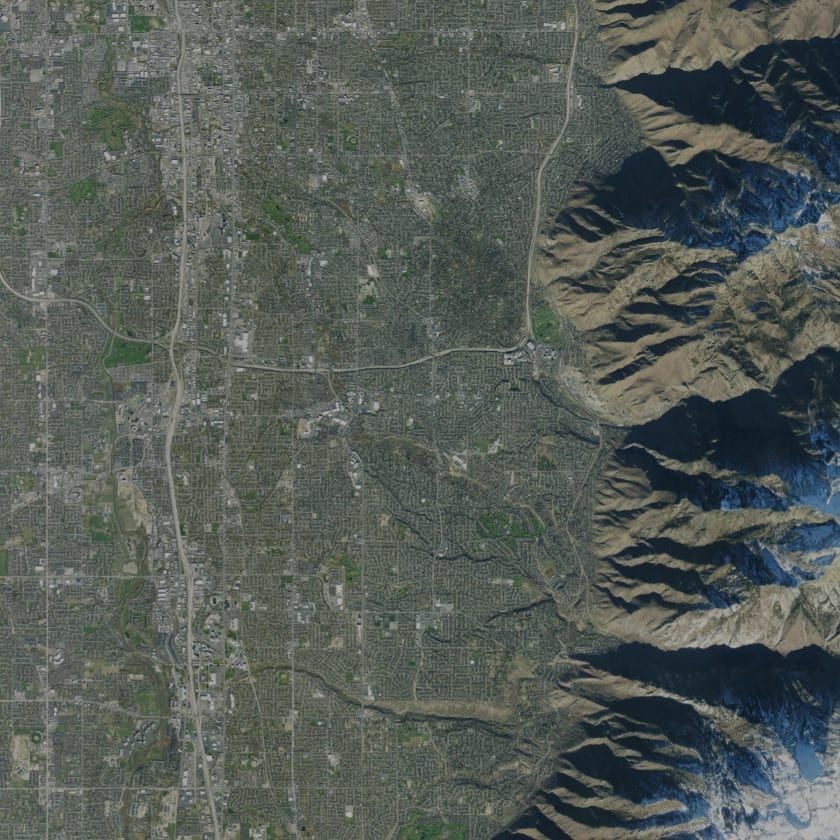
How we serve Cottonwood Heights
Dash repairs appliances all over Cottonwood Heights. We cover everywhere from the Old Mill in its northeast corner to the homes around Brighton High School. Your technician finds the fault and names a flat price before any work. You decide whether it goes ahead. We're family owned and operated. We service most major brands, like Whirlpool, GE, Samsung, LG, Frigidaire and Maytag.
Cottonwood Heights sits high on the valley’s east bench, where Big and Little Cottonwood canyons open. USGS elevation data puts the city at about 4,400 to 5,900 feet. It gets cold, too. NOAA’s weather station at the mouth of Big Cottonwood Canyon, inside the city, averages a January low of 22.8°F. Even its afternoons average under 60°F from November through March. Height and cold both change how appliances behave, so the answers below cover baking, a garage fridge and a garage washer.
Sources: U.S. Geological Survey, Elevation Point Query Service (undated, read October 12, 2026); NOAA National Centers for Environmental Information, U.S. Climate Normals 1991–2020, monthly: Cottonwood Weir, UT US (USC00421759) (undated, read October 11, 2026).
Cottonwood Heights questions
Answered from public sources, not Dash's own jobs.
My cakes rise and then sink. Is the oven broken?
Probably not. Utah State University Extension ties fallen cakes to Utah’s high altitude, and much of Cottonwood Heights sits near 5,000 feet. For a cake mix, it says to follow the box’s high-altitude directions. From scratch, at 5,000 feet, it says to cut each teaspoon of baking powder by 1/8 to 1/4 teaspoon. Cut each cup of sugar by up to 2 tablespoons, and add 2 to 4 tablespoons of liquid per cup. Make one change at a time. To check the oven itself, GE suggests a “biscuit test”: bake canned biscuits by the package directions. GE says an oven normally swings about 30 degrees above and below its setting. On an electric oven, GE says a heating element may have failed. If the bake element is visible, GE says to check that it glows red during a bake cycle.
Sources: Utah State University Extension, Adjusting for High Altitude Baking (April 22, 2005); U.S. Geological Survey, Elevation Point Query Service (undated, read October 12, 2026); GE Appliances, Range & Wall Oven - Oven Temperature Is Not Correct (undated, read October 11, 2026).
Can I keep a spare fridge in the garage?
Check your fridge’s manual first. GE doesn’t recommend a fridge where temperatures go below 60°F, unless its manual or installation instructions say otherwise. It says cold can fool the thermostat into thinking the fridge is cold enough, and at 32°F there may be no cooling at all. At the canyon-mouth station, even afternoons average below 60°F from November through March. An unheated garage can drop below that for much of the winter, so measure yours. GE’s Garage Ready models are made for 38°F to 110°F. It also says aftermarket garage kits and heater kits shouldn’t be used.
Sources: GE Appliances, Refrigerator - Installation Location and Temperature (undated, read October 11, 2026); NOAA National Centers for Environmental Information, U.S. Climate Normals 1991–2020, monthly: Cottonwood Weir, UT US (USC00421759) (undated, read October 11, 2026).
Is it OK to keep the washer in an unheated garage?
Not for use through a freezing winter. GE says a washer should never be installed or stored where it’s exposed to temperatures near freezing, such as a garage. The water valves can freeze, and GE’s warranty doesn’t cover freezing damage. That matters here. The canyon-mouth station averages about 26 nights at or below freezing in December, and again in January. GE says storing a washer in an unheated space is fine once it’s winterized. Turn off the water faucets, disconnect the hoses and drain them, and let the drain hose empty. Then tip the front of the washer up 4 to 6 inches to drain the pump, unless it’s stacked. Before using it again, let it sit at room temperature for 24 hours.
Sources: GE Appliances, Washers - Installation in Unheated Location (undated, read October 11, 2026); GE Appliances, Washer - Storage / Winterizing (undated, read October 11, 2026); NOAA National Centers for Environmental Information, U.S. Climate Normals 1991–2020, monthly: Cottonwood Weir, UT US (USC00421759) (undated, read October 11, 2026).
Appliances we repair in Cottonwood Heights
Refrigerators
Kitchen refrigerators, freezers and ice makers
Common problems
Refrigerator repairWashers
Top-load and front-load washers
Common problems
Washer repairDryers
Gas and electric clothes dryers
Common problems
Dryer repairDishwashers
Built-in dishwashers
Common problems
Dishwasher repairOvens and ranges
Gas and electric ovens and ranges
Common problems
Oven and range repairMicrowaves
Built-in and over-the-range microwaves
Common problems
Microwave repair
Appliance repair near Cottonwood Heights
Cottonwood Heights borders Holladay to the north, Murray and Midvale to the northwest, and Sandy to the south and west. Dash covers all four. In all, we serve 68 cities and towns across Salt Lake, Utah, Davis and Weber counties.
Every city we serve, county by countyHow booking works in Cottonwood Heights
Book online or call
Book online any time, or call (801) 751-4084, Monday to Friday, 8 to 7.
We confirm your time
When you book online, our office calls to confirm it. Appointments run Monday to Friday.
A technician comes to your home
$99 trip fee, credited toward the repair when the repair is completed.